In this blog post I will be discussing the problems of climate change and negative effects it has in this region. Likewise I will also be focusing on how the poor communities in this region face harsher consequences from the effects of climate change. The biggest issue that this region is facing, is desertification(climate change being a main factor).
General info on Climate in the region: As discussed in previous posts, North Africa as a whole is a dry, hot and desert like climate. Only certain areas close to the coast have a hospitable climate. For example, in Egypt the Nile delta and the Nile river is where the majority of the population and agriculture occurs. Hence-forth Egypt is facing the possible threat of expanding its already large desert and lose the limited fertile soil they have( Finlayson 156). Egypt’s large population( over 80 million), the over grazing of certain fertile land, the reliance on the Nile river, and the rise of temperatures threatens the future stability of the nation ( McCarl and Musumba 1). Likewise the rising waters of the mediterranean can lead to the Nile Delta being non-existent ( McCarl and Musumba 1) . The Nile Delta is located in Lower Egypt and like the coast city of Alexandria it is vulnerable to the rising waters. Overall the citizens of Alexandria are facing constant flash floods, and extreme weather patterns( Arraf). Also like the rest of the region, a good portion of the populations are connected to the agriculture industry( World bank).
Caption: This video talks about the people of Alexandria,Egypt losing their homes, businesses, and the farming land gaining salinity in its farming lands.
Caption: This video by Al-Jazeera talks about the desertification happening in Morocco. Consequently, the poorer family communities are suffering from the disappearing oasis’s and their livelihood. Although Morocco has a much more diverse geography then Egypt or Libya, it is being threatened by Climate change and rising populations.
Like Egypt, Libya and Algeria also suffer from the consequences of climate change and fear of the spread of desertification. The region as a whole has seen an increase of temperatures( Schilling 15). These changes in climate can lead to a stronger increase of its limited sources of water, fertile land, thus its fortunate to say that this can lead to massive shortages of food availability for the people of North Africa ( Schilling 20).
Caption: Like Egypt, Algeria is facing massive droughts that are putting crops at risk. Algeria has low precipitation, limited water resources, and a population of over 30 million people. Therefore, the livelihood of farmers and their families are at risk. This short news video gives us a good insight and analysis that the poor and farming class citizens of Algeria will be suffering the most from climate change. Caption: In southern Morocco( mostly a desert), drip irrigation is being used for its water scarcity region. This method is being used in North Africa and Western Asia in general. Using the drip irrigation helps these farms to save water, which is extremely important for a region like Morocco. These are some of the alternative methods that could help with the rise of droughts and other negative effects of climate change. link: http://www.solutionsandco.org/project/moroccos-irrigation-revolution/
Conclusion: In the end the specific group of people that are threatened by climate change are the poor/farmers. For one the poor will suffer when the rise of prices for food/water occur, because of the soil erosion and limited input of local produce.Likewise the farmers will not only lose their crops, but also their careers and income for their families. Hence-froth until this region is able to find alternative methods in finding new career for former farmers, and limiting the effects of desertification, this region will continue to be highly vulnerable to climate change.
Work cite:
Schilling, Freier, Hertig, and Scheffran. “Climate Change, Vulnerability and Adaptation in North Africa with Focus on Morocco.” Agriculture, Ecosystems and Environment 156 (2012): 12-26. Web.
Christian Floret, and Mohamed S. Hadjej. “An Attempt to Combat Desertification in Tunisia.” Ambio, vol. 6, no. 6, 1977, pp. 366–368. JSTOR, http://www.jstor.org/stable/4312324.
Intro: One of the biggest economic sectors of the North African region is the tourism industry. Countries, such as Egypt, Morocco, and Tunisia welcome millions of tourists in a yearly basis. Its abundant luxurious resorts on beachfront property, its rich history, culture and its relative safety for tourists, until recently for some of the areas in this region. In contrast Libya has a non-existent tourist industry since the events of the 2011 Arab spring and Algeria has only recently entered into creating a proper tourism industry for world travelers as they have closed off themselves from the west for a significant portion of the latter half of the 20th century. In general this region has suffered from the Arab spring movements of 2011 as the stability levels of countries like Egypt and Tunisia have suffered, thus decreasing its tourism numbers( mainly from the West). The post will focus on Morocco, Tunisia and Egypt as they are the main countries with a established tourism industry. In contrast, Libya has a non-existent tourism sector since the 2011 revolution and Algeria has a minimal tourist industry.
The following link is a map of the different tourist numbers that each country in North Africa received in the year 2017. As it can be seen, Libya have the lowest number of tourists or better yet no tourists. If they do have tourists, it’s less than 100,000 and non-accurate available data. While Morocco have the highest number of tourists. Beating Egypt, which in the past used to have the highest number. It is not coincidence that Morocco, the most stable country in the region having the biggest number of tourists in the North Africa.
Egypt: Egypt is the most populous country in North Africa and considered the oldest in the region in terms by civilization( Flinders). Ancient Egypt is rich with its monumental wonders, tombs, catacombs, mummies, and temples. Egypt’s most iconic monument is probably the last surviving wonder ( The Seven Ancient Wonders of the world ), the three pyramids of Giza. Hence-forth popular tourist destinations in Egypt is old historical sites, such as the Giza complex, Luxor and Aswan. In upper Egypt, you will find historical sites, such as the Temple of Karnak, Valley of Kings, Queen Hatshepsut’s Temple and many more Ancient Egyptian historical locations(Lee). Majority of these Sites, like other Ancient Egyptian monuments, are over 2,000 years old. Other primary tourist destinations in Egypt are its lush beach resort cities, such as Sharem El sheikh on the Red Sea (Redmayne). Sharem El-Sheikh is renowned for its five star resorts, coral reefs, recreational beach activities and nightlife.
A popular European and Arab destination for tourists. However, in recent years with the Arab Spring concurring in 2011, Egypt have not fully recovered from its previous tourist numbers Redmayne). After Hosni Mubarak was forced out of being the president of Egypt, an islamist elected leader briefly ruled the country (Morsi). However, Morsi lost control of the country after numerous protests of the religious polices being implemented. Consequently, Egypt at the moment have an authoritarian military regime ruling. Its current leader Abdel Fatah-Sisi was part of the military coup in 2013.
Although the tourist umbers have increased from the low of 2011-2013, Egypt is still considered not as stable in its pre-Arab spring days. Hence-forth Sharem el-Sheikh have seen a dwindling population of tourists (Redmayne). The majority of tourists to Egypt are from Europe, US, middle east and China (Cairo Scene). That is a trend that can also be found in the other popular tourist destinations in North Africa. Other popular places to visit in Egypt is the mega cities of Cairo and the costal city of Alexandria. Both offer a city life for tourists. Likewise in Egypt a high number of the workforce are in some form connected to the tourism industry. At one point The tourism industry in Egypt was more then 10% of the GDP ( Smith) and employed over 12% of the workforce in the country ( Smith). This is a common trend in the region, such as Tunisia and Morocco to have the tourism industry be an important sector for the country.
Caption: A plane crash occurred in Egypt in 2015. A Russian plane carrying mostly Russians back to Russia all died in a crash that has been confirmed to be a terrorist attack. This has allowed a decrease in Russian tourists in the area.
Tunisia is the third most visited country in North Africa. Like Egypt, Tunisia is rich with its own history. From its old mosques, roman ruins and ruins of Carthage, Tunisia has abundance of historical sites( Lonely Planet). Tourism is one of the biggest economic sectors for Tunisia( Smith). Over 10 percent of Tunisia’s GDP is linked to the tourism industry( Copley ). Similarly, over 400,000 people in the country are employed in the tourism industry ( Copley). Therefore with the revolution that occurred in the country from the aftermath of the Arab spring in 2011( Selmi) and the rise of terrorist attacks, European tourists have decreased in numbers in visiting Tunisia(Selmi). Likewise Europeans are historically the bulk of tourists who come to Tunisia, as its close proximity, pristine beaches, re liberal Arab country and its low cost were the main attractions for westerners( Copley). Consequently, Tunisia, like the rest of North Africa have begun to accommodate the tastes and tours for Chinese tourists(Xinhua).
Caption: in the summer of 2015, countless tourists were attacked by terrorists on one of the many beach resorts that Tunisia caters to westerners and travelers. over 30 tourists were killed and the attacked was conjured from extremists using a jet ski to access the beach site. Since then Tunisia has faced travel advisory warning from UK and other European countries. In the past Tunisia has been considered immune to events like this, but since the Arab Spring, Tunisia has suffered economically and its stability levels that it had prior to 2011 protests/revolution. Caption: In the city El-Djem, the largest Roman amphitheater outside of Italy. Countless tourists visit this site when staying in Tunisia.
Morocco is the number one tourist destination in North Africa and in the continent. It is considered to be the safest Country in North Africa, and catered to western tourists when they arrive. From the nightlife scene, beach resorts, tours to historic sites and its proximity to Europe has encouraged westerns to visit the country annually( Jones). Morocco is considered to be in top 4 growing destinations that US citizens visit(Jones). Recently, Morocco has attracted Chinese tourists after the investment agreements between both countries( Xinhua). Over 150,000 Chinese tourists visit morocco in the past year alone( Xinhua). The tourism industry like Tunisia and Egypt is over great importance for the economy of the country. For example,15% of the nations GDP is linked to the tourism sector( World Finance 2019).Also over 2.5 million people work within the tourism industry(World Finance 2019). Therefore, it can be argued that they are heavily reliant on this economic sector for the stability of the country. Being one of the safest and well to do countries in the region helps its place in attracting over 10 million tourists every year( Jones). Likewise, a lot of Morocco’s infrastructure has been well established for many years.
Caption: with its relaxed drinking laws, luxury beach resorts, historical sites and being relatively safe, it is an extremely popular destination to visit. From its old mosques, roman ruins, and UNESCO bazars, Morocco has become the most visited country in North Africa and one of most visited in the world.
Caption: this is a short video explaining the Arab spring ( which originated in Tunisia) and effected the tourism and economic industry of North Africa and the rest of the Arab world. However, Morocco was mostly immune to this conflict other than some protests.
Conclusion: In the end of the day majority of the countries in the region are heavily invested and connected to the Tourism industry. Algeria and Libya are not and happen to be both OPEC oil dependent countries economically ( see previous blog posts) . However, since the Arab spring the region has suffered from its tourism numbers as its stability has been questioned and the rise of terrorist attacks. Although, the signs show that it is recovering and they have begun to cater to new tourists( other then westerners), such as people from China. Although, Morocco has been mostly immune to these conflicts and is the best example of how to create a well constructed tourist industry. These three countries lack any sort of significant oil reserves, thus they needed this economic sector for jobs for the locals and income for the country.
Copley, Caroline. “Tourism Industry Fears
‘No-Deal’ Brexit Will Cost It Billions.” Reuters,
Thomson Reuters, 8 Mar. 2019,
uk.reuters.com/article/uk-britain-eu-travel/tourism-industry-fears-no-deal-brexit-will-cost-it-billions-idUKKCN1QP1DW.
“Does China Dominate Global Investment?” ChinaPower Project, 19 July 2018,
chinapower.csis.org/china-foreign-direct-investment/.
Ghanmi, Lamine. “Tunisia Joins China’s
Belt and Road Initiative as It Seeks to Diversify Trade, Investment | Lamine
Ghanmi.” AW, 9 Sept. 2018, thearabweekly.com/tunisia-joins-chinas-belt-and-road-initiative-it-seeks-diversify-trade-investment.
“International Tourism, Number of
Arrivals.” Literacy Rate, Adult Female (%
of Females Ages 15 and above) | Data,
data.worldbank.org/indicator/ST.INT.ARVL?view=map.
“Most Tourists Visiting Egypt This Year
Were from These 10 Countries.” Cairo
Scene,
cairoscene.com/Travel/Most-Tourists-Visiting-Egypt-This-Year-Were-from-These-10-Countries.
“Tunisia: We’re Starting to Put Tourism
Crisis behind Us.” Reuters, Thomson
Reuters, 7 Mar. 2019, af.reuters.com/article/topNews/idAFKCN1QO1WF-OZATP.
“Tunisia: We’re Starting to Put Tourism
Crisis Behind Us.” U.S. News & World
Report, U.S. News & World Report, 7 Mar. 2019,
money.usnews.com/investing/news/articles/2019-03-07/tunisia-were-starting-to-put-tourism-crisis-behind-us.
“Under the Radar: What’s behind China’s Love
Affair with Morocco? | GRI.” Global Risk
In this blog post I will be analyzing China’s investments in country’s from the geographic region of North Africa. For the past few decades, China has been heavily investing in third world country’s. Mainly in the continent of Africa in recent years. these recent developments from China has created economic benefits for the country and to some extent controversy. Also certain patterns of investments are noticeable that China has allocated to this region. Mainly in the energy sector, infrastructure, and tourism. China’s biggest project is the Belt and Road initiative. So called” the new silk road”. The idea is to connect world countries with China’s backing. Mainly in infrastructure, roads, ports, railways..etc. A few Arab countries have been receptive of these projects and have increased its economic relationship with China. This blog will go into detail about China’s investments in the region by analyzing each separate country.
The bottom link is a map of direct investment that China has committed to each country in the region. As it is evident, the most populous country of North Africa ( Egypt) has the highest share of foreign investments from China. while Tunisia has the smallest share($110 million). Link: https://arcg.is/0KL4ii0h
Caption: This short video gives a brief explanation on China’s Belt and Road project and the goals they wish to gain from it. Numerous ports built around Asia, Africa and Europe is a cornerstone of this projects vision. However, some controversy has arisen, as a lot of these ports can supposedly host troop as well.
Egypt:Out of all the countries in North Africa, Egypt has the highest investments from China(China Global Investment Tracker). Egypt has over 23 billion dollars’ worth of investments that are allocated from China(Davies). Since the fall of the Islamist leader Morsi in 2014, Egypt has increased its trade and commerce with China (Davies). China usually gives loans in building infrastructure buildings, such as real estate properties, power plants, and industrial facilities (Reuters). Likewise, it tends to be built by Chinese workers/contracting companies. A recent development is the possibility of having China invest over 20 billion dollars in the advancement of developing its new capital (Reuters). Similarly, these new business agreements have led to a huge surge of tourist visiting Egypt(Saleh). In 2017 only 130,000 tourists from China visited Egypt, but since last year, it has more than doubled(Saleh).
Caption: This video explains why Egypt wishes to build a new capital. Some of the reasons are similar to Brazil’s logic in having to built a new capital( Brasila). It is believed that China will heavily invest in the construction of this new city.
These projects of foreign investment to Egypt, is linked to China’s global plan on the creation of its Belt and Road initiative(Davies). However, talks about Egypt’s new city in being constructed has hit delays(Magdy). Egypt wishes to build a new capital to relieve the population stress that Cairo currently faces (Magdy). In the end though the investments by China has helped build the infrastructure and real estate projects of Egypt, stabilize its economy and lead to increase of trade by both country’s (Magdy). Egypt has doubled its exports to china, such as fruit produce(Magdy). It seems like for the upcoming years the trade and investment initiatives from china will increase in Egypt(Magdy).
Libya:
Not much information on the investment patterns that China commits itself to Libya is really known. Libya has been in turmoil ever since its civil war of 2011(Abdessadok). Some argue that Libya has become a failed a state(Abdessadok). Therefore, it is slightly surprising that China has invested over 5 billion dollars within the last year in Libya(Alharathy). It could be believed that Libya wants a stake at the reformation of Libya and have influence over its industrial and raw goods that Libya will produce after its war finishes. Libya’s biggest export is Oil(Abdessadok), thus it will be un-surprising if Libya begins to increase its oil export to China in the near future.
Tunisia: In the past Tunisia and China have had only limited trade deals and direct foreign investments from the prior country. However, in recent years Tunisia has increased its trade investments with china(Ghanmi). Deals that were made was the development of building Tunisia’s southern port in Zarzis, construct a bridge to one Tunisia tourist islands, build a 100 km railway to connect its petrochemical facilities with the phosphates mines that Tunisia has(Ghanmi). This may be the first initiative in Tunisia agreeing on the advancement of the Belt and Road project(Ghanmi), but overall China’s and Tunisia trade relations are limited. Tunisia has a much stronger economic relation with European countries, but Tunisia dire debt situation and having just recently recovered from its Arab Spring protests, China can become a viable ally economically (Ghanmi).
Caption: One of the major projects that china helped Morocco is in the construction of a large Solar power plant. Morocco lacks any sort of significant fossil fuels, thus they have began to initiate the development of renewable energy resources for the country. Link: http://www.xinhuanet.com/english/2018-09/08/c_137452954_4.htm
Caption: China agrees to invest/built a tech city in Tangier for Morocco. The investment is over 10 billion dollars. Morocco is hoping to diversify its economy and advance its tech industry with the construction of this city.
Morocco: Morocco has increased its economic relationship with China in recent years (Kasraoui) In the last 7 years alone, China’s foreign direct investments to Morocco has increased over 193%( Global Risks Insights). Likewise with majority of the other country’s in North Africa facing shaky transition of governments after the Arab Spring, morocco is increasing its stance as the most stable country in the region(Kasraoui). China has invested in building energy facilities, roads and real estate properties. Similarly, China has expressed a desire to help invest in building railways, bridges and the construction of Tangier tech city ( Global Risks Insights). China has agreed on investing over 10 billion dollars alone for the development of Tangier tech city( Kasraoui). Likewise, since these trade/economic agreements between both countries, there has been a steady increase in Chinese tourists visiting Morocco ( Kasraoui). In 2016 less than 50,000 Chinese tourists visited Morocco, but in the 2018 over 1000,000 tourists have visited the country (Kasraoui). This recent devleopment will morocco’s tourism sector as the un-stability of the region has affected most country’s in North Africa.
Caption: this is an infographic of China’s investments and loans that have been given to countries in Africa. It is highly controversial as western countries worry that china will be taking advantage of some of the countries when they can not payback the large loans that they received. link: https://www.visualcapitalist.com/visualizing-chinese-investment-in-africa/
Conclusion: Overall in the last decade China has severely increased its investment patterns in North Africa. Although this region is considered the birthplace of the “Arab Spring”, it continues to receive investments for infrastructure projects from China. A significant portion of this recent trend is the region accepting and wanting to be part of the Road and Belt initiative. However, the fear is that a lot of these countries will not be able to afford to payback the loans, thus allowing China to gain compensation by demanding a stake in the profits of these projects, land, natural resources or trade deals that heavily benefit them. For example, Angola supplies oil to China in compensation for the building projects that china loaned to them. It is not clear if the countries in North Africa will be benefiting from these investment projects, but at the moment it looks like it will continue to concur.
“Does China Dominate Global Investment?” ChinaPower Project, 19 July 2018,
chinapower.csis.org/china-foreign-direct-investment/.
Ghanmi, Lamine. “Tunisia Joins China’s
Belt and Road Initiative as It Seeks to Diversify Trade, Investment | Lamine
Ghanmi.” AW, 9 Sept. 2018,
thearabweekly.com/tunisia-joins-chinas-belt-and-road-initiative-it-seeks-diversify-trade-investment.
“Under the Radar: What’s behind China’s
Love Affair with Morocco? | GRI.” Global
Risk Insights, Global Risk Insights, 26 Mar. 2017,
globalriskinsights.com/2017/03/chinas-love-affair-with-morocco/.
Caption: North Africa has the highest water scarcity levels in comparison to other regions in Africa.
Intro: In this blog post the focus will be about freshwater availability in the region of North Africa. North Africa can be considered one of the worst regions in relation to freshwater stress scarcity. Primary uses for water in the region is for agriculture and drinking. some country’s like Egypt or Tunisia and Morocco have major sources of freshwater, while Country’s like Libya and Algeria are more dependent on fossil groundwater, thus with the levels of water extraction it is not sustainable. Some solutions for this water scarcity region is building dams to control water levels and desalinization plants. The post will give a general overview of the region and follow up with a close analysis on certain countries of the region ( Egypt, Libya, Tunisia).
Overview: The region of North Africa has an arid hot climate(Finslayon 155). Consequently, this region lacks any sort of significant rain water(Finslayon 156). For example, the city of Cairo, one of the most populous cities in all of Africa gets a precipitation of less than an inch of water in certain years (McLees North Africa and South West Asia). Likewise the majority of land is non-arable (Finlayson 155). In general the region receives less than 12 inches of rain in a year ( Finlayson 155). Hence-forth it is common for for most of these countries, such as Algeria and Libya to be purely dependent on fossil water(Watkins 2006). while the country Morocco is able to access freshwater from the snowcaps of the Atlas Mountains( Guessous). Likewise, Morocco has some minor lakes and rivers in the country( Guessous). Therefore, it is not depending on on major source of freshwater( like Egypt).
The link in the bottom is a map that lists the water stress levels of each country in North Africa. As you can see all of the countries have high levels of water stress, but by far Libya is the worst. As it is the only country from the region that lacks any sort of river or major lake. link: https://arcg.is/1z0efO
Libya:
Libya probably has the highest water scarcity levels in comparison to any other country of North Africa ( Watkins 2006).Libya lacks any rivers or lakes, and because of its arid hot climate ,it lacks any sort of significant rain levels. Therefore, its main source of water comes from fossil water( groundwater) and in recent years desalination plants. , which is extremely costly to produce.. Consequently, the population is much more prone to scarcity of water. During muammar gaddafi period as ruler of Libya, he seeked to create a man-made river reservoir in the country. He believed he could use the aquifers beneath the deserts of Libya( Watkins 2006). However, the project was never completed with Gaddafi dying in the 2011 Libyan civil war.
Caption: Libya’s planned man-made river. It was never fully completed, thus it is unknown if plans will re-occur after Libya ends its current civil war. link: http://news.bbc.co.uk/2/hi/science/nature/4814988.stmCaption: it is clear that the MENA region has significant desalination plants. however, it is extremely costly to produce freshwater from this method, as the amount of energy it takes is large.It also leads to toxic brine from the waste of desalination of the seawater. Link:https://www.bbc.com/news/science-environment-46863146
Caption: this video gives an overview of Algeria building the worlds largest desalination plant. Algeria like its neighboring countries suffer high levels of water scarcity, thus it aims to find other sources of freshwater, aside from fossil water and it’s limited water from its minor rivers/lakes for its ever growing population. Caption: map of Tunisia’s significant bodies of water. The medjerda river is its main source of freshwater.Overall Tunisia fairs better than its neighboring countries ( Libya/Algeria). link: https://kids.britannica.com/students/article/Tunisia/277453
Tunisia: In contrast to Libya or Algeria, Tunisia has major rivers and to some extent lakes. the Medjera river flows throughout northen Tunisia( The World Fact Book). The Medjera River( 280 mile length) is the long river in the in the country. It is used for crops, energy and drinking water for its citizens( Wadi Majardah). Likewise, Tunisia has built numerous dams throughout the country to control the water levels and access its energy properties( Souissi). Tunisia alone has 30 dams and numerous reservoirs( Souissi). However, the country still experiences extreme droughts and high levels of water scarcity( Souissi). Hence-forth it brings up the prices for drinking water and accessibility for water for farmers( Souissi).
Egypt:
Like the rest of North Africa Egypt is mostly an arid dry country. It consists of desert and non-arable land (Finlayson 157). However, the Nile river flows through the country and the mouth is located in Alexandria (Finlayson 156). Over 90% of the Nile’s water availability is used by Egypt (Finlayson 156). The Nile is used for agriculture purposes, energy and drinking water. Likewise, certain crash crops are harvested via the water source of the Nile. A common cash crop in the country is Cotton, which requires large quantities of water and it is non-native to the country (Finlayson 156). The Nile river is its only significant natural resource of water. Its agriculture industry is mainly located around the Nile basin, as it is its only area that can properly grow a variety of crops and support large scale farming. Consequently, with Egypt having a population of over 80 million people, it is too depended on the Nile, thus leading to water scarcity for its people and future environment problems, such as desertification. Even though the building of dams ( such as the Aswan dam) has helped control water levels for the region, it has allowed the nutritional sediments in the soil to be more saline and lose its effectiveness( Finlayson 156).
Caption: this short video gives a quick explanation on the low levels of the Nile with Egypt’s current climate/ high usage from its large population and the pollution it is absorbing from waste. Caption: All of the country’s in North Africa have harsh hot weather seasons, thus they are purely dependent on its already established water sources( instead of rain fall). However, with the increase of population, water usage and extreme weather patterns the region is highly vulnerable to lack of clean/freshwater. Morocco fairs better than the other countries in the region( with access to snowcaps, rivers, lakes, and cooler climate).
Conclusion: The region is growing in population and consumption ( Finlayson 154). The over grazing over its land is common and the strain of its already established water sources ( fossil water, nile river, Medjera river.etc) is evident. Consequently, the region has tried building desalination plants, but as discovered it is costly and can lead to more waste. In the end this region has one of the highest water scarcity stress levels in the world.
“Egypt Received $7 Billion of Promised
$12 Billion in Gulf Aid -…” Reuters,
Thomson Reuters, 29 Sept. 2013,
uk.reuters.com/article/uk-egypt-finances/egypt-received-7-billion-of-promised-12-billion-in-gulf-aid-central-bank-idUKBRE98S05N20130929.
Caption: This map shows the major non-renewable resources that North Africa has. As you can see its industry is heavily influenced by fossil fuels. Although some country’s, such as Tunisia and Morocco lack any significant petroleum or Natural gas reserves. link: https://www.courses.psu.edu/test/test100_hkr/AFIM/Main_HTML/NR_N.html
In this blog post I will be discussing the inner dynamics of the resources of most countries in North Africa. Some of them are rich in fossil fuels, such as Libya or Algeria. While others like Tunisia and Morocco lack any significant sources of oil, gas and coal. Similarly, the access to timber, water and minerals that are existent/non-existent in some of the country’s will be analyzed. Conflicts over resources has been evident in certain areas of this region. Out of all the country’s, Libya and Egypt have been the most frequent in gaining attention over resource conflicts in recent years. Overall the main causes of conflict over resources is access to water and the economic dependency on fossil fuels.
Egypt: As discussed in previous posts, Egypt is a mostly desert arid country. However, the Nile river flows through the country and the mouth is located in Alexandria ( Finlayson 156). Over 90% of the Nile’s water availability is used by Egypt ( Finlayson 156). Most of it is used by harvest in cotton. Cotton requires large quantities of water and it is non-native to the country. Therefore, Egypt is a highly water stressed country. The Nile river is its only significant natural resource of water. Its agriculture industry is mainly located around the Nile basin, as it is its only area that can properly grow a variety of crops and support large scale farming. However, Egypt has a population over 80 million people, thus it is water strained. Hence-forth a resource conflict over the Nile has arisen from other country’s that share the Nile River.
The video below gives us a brief understanding of the conflict between Ethiopia and Egypt. Ethiopia plans to build a massive dam on the Nile river, thus limiting the flow of water that Egypt will get( Egypt is in control of the lower stream of the Nile). This has led to numerous argument’s over this resource. This Al-Jazeera video is about 5 minutes long.
Egypt lacks any sort of significant source of forestry or Oil, thus it has been dependent on its potential reserves of natural gas for electricity( Schindler). However, Egypt’s already established natural gas refineries are not enough for its every growing population. Therefore, they have signed a massive economic deal with Israel, in importing large quantities of natural gas from them( Schindler). This might relieve some of the hardship of lack of electricity that the Egyptian people constantly face.
Caption: this short video talks about Egypt possibly becoming one of the largest natural gas producers. In recent years they have been finding large reserves of natural gas. This could possibly help the conflict the country faces from its people in not having adequate electricity/energy needs. caption: Libya is currently split over numerous different faction groups. Each eying to control the oil refineries. Since the war, Libya’s production rates of Oil has severely been cut. It is not clear when stability will resurface in the country. link: https://www.economist.com/middle-east-and-africa/2016/02/06/the-next-front-against-islamic-state
Libya: In contrast to Egypt, Libya has large reserves of fossil fuels. Mainly Oil and to some extent natural gas. However, unlike Egypt, Libya lacks any sort of major access to freshwater. In other words, Libya’s main water source is either groundwater or desalination, which is extremely costly to produce. Libya has no river’s or signifiant lakes for its 6-7 million people( Gatenby). However, its oil resources are immense, thus its economy is purely driven by that sector. Its exports is purely driven by Oil and petrochemicals ( The World Fact Book). Therefore it can be argued that its foreign exchange is heavily reliant on Oil. Like Algeria they are a founding member of OPEC( international organization that control/trade oil). However, since the fall of Mummar Gadafi( Libya’s dictator from 1969-2011), Libya has been in a civil war. A large part of the war is on controlling the vast array of oil fields in the country. Controlling the oil-field’s will enable whatever party to be the economic power-horse of the state.
The video below gives some insight on the conflict in Libya. Likewise it gives some details about how the control over Libya’s rich Oil resources are a one of the main battles-spots in the country. At the moment it looks like the conflict will not be over anytime soon.
Tunisia: Unlike its neighbors Algeria and Libya, Tunisia lacks any source of fossil fuels. the only minimal source of fossil fuels it has is Coal ( the World Fact Book). Coal is not as highly prized economically as Oil or natural gas. therefore, the country is not dependent on a fossil fuel for foreign exchange. However, Tunisia does have some sources of phosphates. Yet, mining Phosphates is not as lucrative as Oil or natural gas. Consequently, the country has decided to diversify its economy. Other then its growing tourism sector( Choat), Tunisia has begun increasing its energy input via renewable resources, as Tunisia is heavily reliant on importing natural gas from Algeria ( over 40% of its electricity needs) (Tunisia-Electrical power Systems and Renewable Energy). Hence-forth Tunisia plans to increase its non-renewable energy sector by 30% by 2030 (Tunisia-Electrical power Systems and Renewable Energy). Mainly derived from Solar energy and wind power.
Algeria: Algeria is second to Libya in its proven Oil reserves( the World Fact Book). like Libya, it is a founding member of OPEC. Hence-forth like other OPEC country’s, they are heavily connected to the oil industry. Its energy sector and foreign exchange in export is driven by its oil and oil based products.
caption: the videos gives a brief overview of Algeria’s growing production rates in Oil and its increase in dependence over the resource.
Some of the conflicts that is arising from its large oil reserves is the increase of inequality in the country. As it is commonly “dutch disease”, since the discovery of its oil reserves in the mid 20th century, Algeria has seen a growth of wealth for the upper class, but a bigger divide with the poor ( Chikhi). A lot of the country’s Oil refineries is located in the south ( Algeria’s South: Trouble’s Bellwether). The area in the south is heavily populated by the marginalized Berber people (Algeria’s South: Trouble’s Bellwether). Massive protests and issues have arisen in the area, as the Algerian people are majority Arab, consequently endorse a form of arabization in the state. However, the country has so far not faced Armed protests from the people that its neighbor Libya faced( as discussed earlier in the post). However, in the past Algeria has faced rebel factions, and its oil industry was at risk( Algeria’s South: Trouble’s Bellwether).
Carrere, Celine,
Julien Gourdon, and Marcelo Olarreaga. “Regional Integration and Natural
Resources: Who Benefits? Evidence from MENA.” International
Economics 131.C (2012): 23-41. Web.
Eisgruber, Lasse. “The
Resource Curse: Analysis of the Applicability to the Large-scale Export of
Electricity from Renewable Resources.” Energy Policy 57
(2013): 429-40. Web.
Boudghene Stambouli, Khiat,
Flazi, Tanemoto, Nakajima, Isoda, Yokoyama, Hannachi, Kurokawa, Shimizu,
Koinuma, and Yassaa. “Trends and Challenges of Sustainable Energy and
Water Research in North Africa: Sahara Solar Breeder Concerns at the
Intersection of Energy/water.” Renewable and Sustainable Energy
Reviews 30.C (2014): 912-22. Web
Forrest, Michael,
Richard Moody, and Danny Clark-Lowes. “Oil in Libya.” Materials
World 19.9 (2011): 32-33. Web.
Maddy-Weitzman, Bruce. The
Berber Identity Movement and the Challenge to North African States. U of
Texas, 2011. Web
In this blog post I will be focusing on the Gender inequality that is prominent throughout North Africa. Specifically, on the lack of equal rights for women and the discrimination they face, because of their gender. Since this is a very broad topic that needs to be condensed, this post will only focus on some of the countries of the region. Tunisia, Morocco and Egypt will be the focus of the study. However, Libya and Algeria will be analyzed to some extent.
Egypt: The most populated and cultural powerhouse of the region. Since the fall of Mubarak and the rise of a new regime, the crimes against Women have become much more noticeable to the world wide audience. After the 2011 revolution, countless women were sexually assaulted (Danahar). A lot of the crimes went unpunished in the ensuring chaos(Danahar). Similarly, Egypt is infamous for its female genital mutilation practice. It is uncommon in the city’s, but in the rural communities it can be found. Although it is rare practice in the rest of the Arab world, Egypt continues to commit this horrendous crime(Adel). In a 2016 survey by the UN, it was found that over 50% of female children have undergone the procured of “circumcision”. However, there are positives in the country in relation to women empowerment.
Over 80% of the female population is literate (Egypt Today). In higher education, women make half of the enrolled students (Sadek), thus it shows that after all the reforms, industrialization and to some extent social polices that Egypt encouraged in the mid 20th century has given some positives for gender equality. Although the country still lags in comparison to some of its neighboring country’s. In the end Egypt’s negatives and positives will always be more noticeable in the region, as it is the economic, cultural capital of North Africa. Cairo alone is the most populous country in the whole continent of Africa. Even with all its negatives, certain improvements have been existent in the country. Such as, lower fertility rates, higher education levels and the ability to vote and pass on your citizenship to your kids (numerous Arab country’s do not allow the women to pass on their citizenship when married to a foreigner).
Caption: this news short video by France 24 talks about the female genital mutilation that is still practiced in Egypt.
The link in the bottom is a map of the gender inequality of all the countries in North Africa. As you can see Tunisia and Morocco is lower than Egypt. Even though Egypt is wealthier and older as a civilization, they have continued to struggle with granting Women equal rights to Men.
Caption: this map shows the fertility rate of the world. As you can see the North African region is higher than western country’s. However, it is not the highest in the world. Countries like Nigher and Chad have a much higher fertility rates( which are neighboring country’s of Libya and Algeria. On average an Egyptian women would have 2.6-299 kids. While Tunisia is less than that( about 1.81). The country’s with a lower fertility rate in North Africa tend to be better with gender equality. link: http://www.geocurrents.info/population-geography/total-fertility-rates-by-country-1950-and-2015
Tunisia:
Compared to the rest of North Africa, Tunisia can be considered the best country in terms of female equality. It is against the law for Men to marry multiple wives(BBC). Tunisia is probably the most progressive Arab country (BBC). Likewise, Tunisia has just recently allowed Tunisian women to marry non-Muslims(BBC). Throughout North Africa and the Arab world, Men are allowed to marry who they wish (non-Muslim or muslim, but women are usually exempt from tis luxury. Similarly, Tunisia has abolished a law that would allow a rapist to marry its victim and be acquitted of their charges(BBC). That has been sadly a common practice in the region. In the end some improvements of Women have occurred after its 2011 revolution (BBC).
Caption: This short documentary by Aljazeera, discusses the strides that the Tunisian government have made in closing the gender inequality.It brings light to the sheer amount of Tunisian women who work in the workforce( its a higher number), the higher education females receive, and the ability for Women to marry non-Muslims. Caption: Women march for equality in gaining inheritance. It is common Muslim country’s to give Men a bigger inheritance. With the recent laws that passed in Tunisia, Women are now gaining momentum in changing these discriminative laws. link: http://www.arabnews.com/node/1276291/middle-east
Morocco: Morocco like Tunisia has a better record of gender equality than Egypt. Women in Morocco have made strides in increasing the percentage of their representation in upper education (Laskaridis). Similarly, decades ago the average age of Women getting married in Morocco was 17. Now its 24-25 years old. Therefore, it shows that the country has allowed Women to enter the workforce and encouraged education for its female citizens. However, in the labor force Women only make less than 30% of that sector ( Laskaridis). Likewise on average the salary of a Women is much lower than men in the country still ( Laskaridis). On average Women make 17% less than Men ( Lahsini), even if they are as qualified.
Conclusion: Although the region of North Africa have made strides in giving Women better rights. From the ability to pass on citizenship, increasing the litteracy rates, access college, and increasing the age of when getting married. Likewise, some country’s like any region have made better/quicker improvements for Women’s rights. In this case, it is Tunisia, as they have a higher percentage of women in the workforce, lower fertility rate, ability to vote, and a higher number of Women who work in Journalism and governmental positions. I believe that Country’s like Egypt and Morocco need to look at Tunisia for decreasing the gender inequality that is prominent in the region.
Works Cited:
Abdulaal, Mirna. “Egyptian Women in the
Workforce: Then and Now.” Egyptian
Streets, 19 Oct. 2018,
egyptianstreets.com/2018/10/16/an-evolution-of-the-working-egyptian-woman/.
Bailey, Charlotte. “Has Tunisia’s
Landmark Law to Protect Women Been a Success?” Time, Time, 26 July 2018,
time.com/5348377/tunisia-women-violence-law/.
“Egypt Received $7 Billion of Promised
$12 Billion in Gulf Aid -…” Reuters,
Thomson Reuters, 29 Sept. 2013,
uk.reuters.com/article/uk-egypt-finances/egypt-received-7-billion-of-promised-12-billion-in-gulf-aid-central-bank-idUKBRE98S05N20130929.
In this blog post, I will be focusing on two countries from North Africa on their economic development. Mainly focusing on their exports, natural resources, industrial goods and services. This will be followed by a short analysis on any possible barriers these countries face from further economic development. Egypt and Libya will be the two countries focused in this post. However, Egypt will be more focused on as it is the more populated and powerhouse of the region. The region in general has a high economic inequality. The link below gives us some insight on the Gini index of each country in the region. Th higher the number the higher of economic inequality a country faces.
link: https://arcg.is/eCD9P The link above is a map to the Gini Index of the world.The higher the number, the higher economic inequality the nation faces. North Africa compared to other regions, such as the Gulf, Europe, Australia and East Asia have a much higher Gini index. Consequently, it is not surprising that this region faces such economic issues.
Egypt: Egypt like much of North Africa have been struggling economically in recent years. Primary exports for the country is gas, agriculture, cotton, textiles and crude petroleum (The World Factbook: Egypt). Agriculture specifically is an important economic section of Egypt. Almost half of the population works to some extent in the Agriculture sector (Agriculture and Food Security | Egypt ). However, this is a major issue as the country itself is mainly a desert and non-arable land. The Nile river is the only significant source of fresh water for the country. Without it this region would probably not have its rich past civilization’s or the large population it currently has. Egypt has a population over 90 million people (Agriculture and Food Security | Egypt). Consequently, the populations in the country all live around the Nile River. Hence-forth water scarcity is a true concern for this region. It may be able to grow a variety of fruits, vegetables, luxury commodities like Cotton, but it is becoming a strain on it’s fresh water resource. In the picture below( image 1), it gives us some insight on how the population of Egypt surrounding the Nile.
Image 1: Although Egypt has a lot of land, the population is centered around the Nile and its delta, as that is where people have access to water and commit itself to agriculture projects. While the rest of the country is barren and desert like. link:http://sedac.ciesin.columbia.edu/data/collection/gpw-v4
Similarly, Nile River does not only cross Egypt, but other African country’s, such as Sudan, South Sudan and Ethiopia. A dam is possibly being built in Ethiopia that will heavily constrain the water measurements that Egypt will receive (the Nile end in Egypt). Consequently, its agriculture sector is vulnerable (Wirtschafter). Ethiopia and Egypt’s relations can become in a dire situation if a compromise is not brought forth. It is common for countries to argue on water levels when sharing a river source (Wirtschafter).
link: https://www.youtube.com/watch?v=y5iLk3NRnQs The video above gives us some info on the hydro-economics between Egypt and Ethiopia. Both have rising populations, but in the end each country will look after its own people. If Ethiopia builds this dam, the water levels that Egypt will receive via the Nile will be severely depleted, thus can lead to a possible water crisis for a region that is already scarce with water.
Other foreign exchanges that Egypt depends on is remittances. The country receives over 26 billion dollars from its Egyptian diaspora ( Egypt today staff). Egypt is also a country that obtains large amount’s of foreign aid. the US and other western powers consider Egypt as a regional ally in Arab politics. Similarly, it’s stability is of importance for the region’s future( Najjar). Since the Camp David Accord in 1979 ( Najjar), Egypt has consistently received over a billion dollars annually from the US. The aid mainly goes to military investment and security. Likewise other regional Arab allies, such as UAE, Kuwait and Saudi Arabia have frequently given the country foreign aid. (Reuters). another major economic sector for Egypt is its tourism.
Egypt used to gain over 12 billion dollars in revenues prior to its revolution in 2011 ( Ram). Now it has faced over a 70% reduction in tourism numbers with the upheaval it faced in recent years. Likewise almost 12% of the population work in some form in the tourism sector, thus being a major source of employment for the country (hutchinson).
Libya: While Egypt lacks natural resources in the fossil fuels, Libya has large Oil reserves and is one of the founding members of OPEC. Libya’s economy is entirely driven by petroleum( OPEC:Libya). 82% of Libya’s exports earning’s are petroleum related (OPEC:Libya). Likewise, the oil and gas service sector account for over 60% of its GDP earnings. Hence-forth is much dependent on one source of income, compared to Egypt. Although Libya has much richer resources in the fossil fuels to Egypt and a population of less than seven million( Egypt has over 80 million), it lacks any significant source of water. While both country’s are dominated by the Sahara Desert, Egypt has the Nile to depend on, Libya has no major river or lake in its Country. Consequently, the population is much more prone to scarcity of water. During muammar gaddafi period as ruler of Libya, he seeked to create a man-made river reservoir in the country. He believed he could use the aquifers beneath the deserts of Libya( Watkins). However, the project was never completed with Gaddafi dying in the 2011 Libyan civil war.
Image2: The map above gives us some perspective on how the reservoir river would like. It was planned in multiple phases. It was described as being the ‘eight wonder of the world’. Link: http://news.bbc.co.uk/2/hi/science/nature/4814988.stm
The economic situation in Libya is much dire than Egypt. It could be argued that Libya has become a failed state. Egypt has one of the worst freedom of markets in the world( ranked 144) ( Heritage). While Libya is not even ranked ( Heritage).Tourism is non-existent in Libya ( Reuters). It lacks any of the foundations that Egypt has built for that sector. similarly, Libya under Gaddafi ( 1969-2011) was isolated from the Western world. last but not least, Libya is currently in a civil war, thus foreign aid in investments for the nation is scarce or people visiting the country in general.
The video below is a short video by Euronews that discusses the possibility that Libya has become a failed state. Its oil revenues has been cut in half and the country is still in a civil war since the revolution of 2011.
In the end when comparing both country’s Egypt is in a much better situation. It has a much more diverse economy, ( tourism, agriculture, higher amounts of foreign aid, relative stable government.etc), but both lack freedom of market or equal opportunities to the wealthy. On average the poor in Egypt who live in the villages make less than 3$ a day ( Bower). Therefore, the economic development for both nations is bleak. Especially for Libya’s case( relying entirely on non-renewable resources and being in a war). Likewise its harsh weather( being mainly desert) limits both nations flexibility in economic development.
“Egypt Received $7 Billion of Promised
$12 Billion in Gulf Aid -…” Reuters,
Thomson Reuters, 29 Sept. 2013,
uk.reuters.com/article/uk-egypt-finances/egypt-received-7-billion-of-promised-12-billion-in-gulf-aid-central-bank-idUKBRE98S05N20130929.
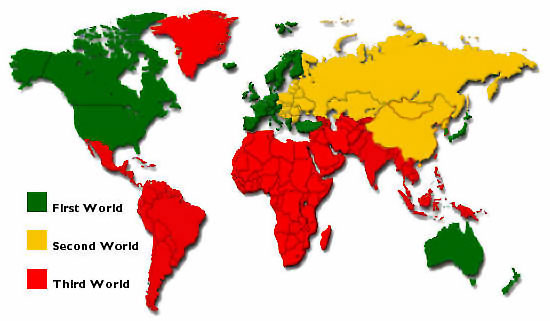
Image 1: During the cold war the world was divided into three regions. first world were considered allies of the U.S. Second world followed/under the influence of the Soviet Union and the Third world were developing country’s not aligned with either party. As shown in the map North Africa is categorized under Third World. link:https://www.nationsonline.org/oneworld/third_world_countries.htm
Intro: In this post I will be discussing the different allegiances country’s in North Africa had. Country’s like Morocco and Tunisia tended to align themselves with the west (U.S). However, Libya and Algeria were considered regional allies for the Soviet Union. While Egypt allied itself with the Soviet union early on, but changed its allegiance with the U.S midway through the Cold War for its personal interests. Overall North Africa as a region was under the Third World umbrella, thus their interests in allies differed to Second World or First World. Since Egypt is the most populous and thus most influential country in north Africa, we will go into detail about their positions in the Cold war.
Egypt: Egypt is the most populous Arab country (over 80 million people), thus its policies and culture effects its nearby neighbors more the others. During the rule of King Farooq, Egypt was a close ally of western countries (France, Britain), but after the 1953 revolution, the monarchy was toppled and military officers became the leaders of the country. Gamal Abdul Nasser led the revolution and ruled Egypt from 1956-1970(his death). Nasser is considered the biggest “champion” of Pan-Arabism (later referred to Nasserism).
Image 2: Gamal Abdul Nasser during his presidency of Egypt waving to his followers. Under Nasser, Egypt moved away from the Western powers and began a string of socialist policies for the country.
Pan-Arabism was the ideological thought of Arab nationalism/Arab socialism and unity against its former imperialists Likewise its core principle is the unification of all so called “Arab states”. Consequently, Egypt was a non-aligned country in the cold war (and founded member), but because of its nationalization of the Suez Canal and its criticism towards its former colonizers (France and Britain), they became distant from the Western powers. Similarly, Egypt’s hate for Israel and its supporters (U.S, western Europe) propelled its further alimentation with the U.S and western Europe. However, indirectly this led to a closer economic relation with the Soviet Union. Egypt began a nationalization program under Nasser and hence-forth a socialism structure occurred in Egypt. Privatization was heavily limited and thus the market was controlled by the government.
Gamal Abdul Nasser gives a speech about the positives of socialism and help eliminate the poor working class and bring equality to the country. These type of policies restrained Egypt in being an ally of the U.S in the cold war( As the U.S was considered the biggest champion of capitalism).
Egypt sent out thousands of educational teachers to other Arab countries and funded Nasserism parties to its neighbors, in the hope of fueling socialist/ Pan-Arabism movements. Egypt’s meddling in other country’s helped fuel Algeria and Libya’s revolutions (which were built on socialist and Arab nationalist thinking). Egypt’s military was heavily equipped with Soviet Union weaponry. Likewise, large scale infrastructure projects were built under the supervision of the USSR as well (such as the Aswan dam). However, being a religious country, communism was suppressed (communism encourages the act of being an atheist).
Image 3: A newspaper clipping of Nasser nationalizing the Suez canal and removing the power France and Britain had over it. The Suez canal halves the length of time it takes to travel from say India to France( instead of sailing around the tip of Africa). link: https://www.socialist.net/1956-suez-crisis-the-death-of-an-empire.htm
Although the early alliances that Egypt had with the USSR was broken after the death of Nasser and succession of Anwar Sadat. Sadat began to create closer economic deals with the U.S after the yum Kippur war (1973 war against Israel), and consequently led to the 1978 David camp accord (peace treaty with Israel). Hence-forth the opening of Egypt’s market concurred and the privation of industries followed. Socialist polices died away and Egypt became a strong ally of the U.S towards the end of the Cold War.
Libya and Algeria: Libya and Algeria were supporters of the USSR during the cold war for the most part. Algeria gained its independence from France in the 1960s after its brutal revolution war. While Libya gained its independence from Europe in 1951 and a monarchy was put into place. However, in 1969 Libya’s monarchy was overthrown and Muammar Gaddafi became the new leader of the country. These two events for both country’s allowed a socialism led government and alienation with the west ( U.S and Western Europe). consequently, these domestic/foreign policies led them to have economic interests with the USSR. The Soviet Union was the first European country to recognize the newly independent Algeria and throughout its war with France, were supplied weapons from the USSR. However, in the end both country’s like the rest of North Africa continued their non-aligned policy( in relation to the Cold War). Both country’s revolutions were to some extent influenced by Nasserism and Pan arabism. For example, the Algerian war against France was fueled for its independence from European colonialists and creating an Arab nationalistic identity.
Image5: Algerians protested against France’s authority. Consequently the protesters were killed and dumped on the streets. These actions led to the brutal Algerian revolution that concurred with them being distant from the West in the Cold War. link: https://narratively.com/when-the-bridges-of-paris-ran-red-with-algerian-blood/Image 6: Gaddafi( de facto leader of Libya) on the left and Gamal Abdul Nasser ( leader of Egypt) on the right. Gaddafi looked up to Nasser and thus his distrust of the West allowed soviet union relations to occur in Libya.
Tunisia/Morocco: Morocco has been ruled by a monarch family before, during and till present day. Morocco like the rest of North Africa’s country’s were a non-aligned member in the Cold War. Therefore, it has economic ties with the Soviet Union and the U.S. However, after the Soviet Union supported Algeria’s position on the Western Sahara war( Algeria gave support to the notion that Western Sahara secede from morocco), their relationship was strained in the late 1970s.
Image 7: Western Sahara is highlighted as shown on the map. Morocco controls this area, but no UN country has officially recognized their control over it.
In the end Morocco can be considered more of a US ally than a USSR ally during the Cold War. Morocco was one of the first nations to recognize the US’s independence from Great Britain and have close economic relations throughout the 20th century. Likewise Morocco’s anti communist policy ( like the rest of North Africa) and its non-socialism government policies helped for them to be strong economic partners.
Tunisia achieved independence from France in 1956. However, unlike Egypt or Libya ( showed uneasiness with Western powers after its liberation), Tunisia continued having close ties with France and other western country’s. Therefore they were never inclined to create close economic relations with the Soviet Union. In the end of the day the country’s in North Africa that had a strong economic relationship with the Soviet Union was because of alienating themselves from the West for being colonized by them. While in contrast country’s like Tunisia and Morocco did not have that relationship with the Soviet Union as after independence, they continued to have peaceful relations with France,Britain.etc. Although some country’s like Egypt were once close economic allies of Soviet Union became a major ally of the US after the signing of Camp David Accord( which gave Egypt billions of dollars worth of military aid via the US). Overall they all were non-aligned members, thus this region does not have the same alliances that eastern Europe had with the USSR or South Korea’s relationship with the U.S. their foreign polices were mainly led by economic interests and keeping control of the already established government during the Cold War.
Work Cite :
Lefèvre, Raphaël. “Morocco, Algeria and the Maghreb’s Cold War.” The Journal of North African Studies 21.5 (2016): 735-40. Web.
Chamberlin, Paul Thomas. “Rethinking the Middle East and North Africa in the Cold War.” International Journal of Middle East Studies 43.2 (2011): 317-19. Web. “The Camp David Accords.” The Arab-Israeli Conflict, Volume IV, Part I: The Difficult Search for Peace (1975-1988). Princeton, New Jersey: Princeton UP, 2014. 287. Web.
North Africa is a region with a vast amount of natural resources ( oil,gas.etc), but it is also a highly unstable and prone to extreme economic-inequality Consequently, it has led to mass migration from these countries( some more than others, such as Libya). In the video below, Aljazeera news gives a short prognosis of the corruption in MENA. citizens from these Country’s have either attempted to migrate to Europe or rich Arab country’s such as Saudi Arabia, U.A.E and Qatar. Push factors for people leaving North Africa to Europe( western country’s,Gulf country’s as well) is war and poverty. Pull factors for them leaving are desiring political stability a better economic opportunities.
the famous “Arab Spring” of 2011 began in Tunisia because of the lack of jobs/liberty and stability the people. Consequently, it spread to Libya and Egypt. The bottom link via the Guardians gives us an interactive timeline on the dates and spread of the Arab Spring. Although the Arab Spring has ended and new governments have technically been brought in, economic inequality and corruption is still an epidemic in these societies. Similarly, the Libyan people toppled their dictator Gadhafi, but are still in a civil war with one another and Islamic terrorist organizations, such as ISIS have taken hold of certain areas in the country. An example of the war torn country is shown in Image 1. The war has been going on since 2014. While Image 2 shows a map of the spread of the Arab Spring.
Egypt( most populous country in North Africa) was able to topple its dictator Hosni Mubarak (he ruled for over 2 decades), but merely replaced him with another military leader (Egypt has been controlled by military leaders since toppling the monarchy of Egypt in the 1950s). Therefore, it is un-surprising that Egypt has become one of the worst country’s in the world in violation of human rights. Journalists have been imprisoned that negatively report Sisi’s government (current leader of Egypt) and Islamic political party’s have seen an aggressive crackdown from the government. Consequently, over 500 people have been sentenced to death which has led to numerous Egyptians wanting to leave. The video below by France 24 gives some overview on this conflict. However, other benefits that countries from north Africa see in migration is temporary living abroad to gain work experience and a steady flow of income. Likewise, remittances from Egyptians working abroad Is a big economic contributor for Egyptian society. Over millions of north Africans live abroad working in the GCC country’s or western country’s. In image 3, it gives some insight on the level of diaspora of Moroccans living abroad. Morocco may have more stable conditions then country’s like Libya, but it still faces government corruption and economic inequality. Large numbers of young educated Moroccans are unable to find jobs. Consequently, many have migrated to western country’s, such as Spain, Netherlands and Belgium.
While Image 4 and 5 gives us information on the Egyptian diaspora.
Libya and like other Arab country’s had their borders drawn by France, Britain and other European country’s after world war 1. Therefore, it is understandable that a lot of the issues Libya are facing is the cultural clashes between each other as people from Tripoli and Benghazi have a different outlook on implantation of Islam, culture and history. Consequently, large droves of people have been leaving Libya for Europe on migrant boats (via the Mediterranean). Libya can be considered to some extent a failed state at the moment. The Video below gives some contextualization on the appalling conditions Libyans face in their country and in their attempts to get to Europe. Likewise Image 6 shows us how desperate people are that they are boarding over crowed boats that are ill equipped to cross the mediterranean sea.
This video shows how thousands of Libyans are leaving its country. Mainly to get to Europe via boats. A lot of the boats are over the limit, thus many of them sink and lead to numerous deaths. However, since the rise of Far-right radical movements in Europe, a few western country’s such as Italy is wary in accepting/saving so many migrants as they are worried of the cultures clash and effecting its already slow/lagging economy.
Introduction to the region: According to the UN in regards to geographic regions and other maps, the following countries are considered to be part of North Africa: Egypt, Algeria, Tunisia, Morocco, Libya, Sudan and the Western Sahara. Image 1 highlights the prior listed country’s as “North Africa”. These countries can be considered a Vernacular region. All of the listed countries have Arabic as its official language. Likewise, all country’s are part of the Arab League, thus sometimes this region is combined with the mideast=MENA. The Umayyad Dynasty (an Arab/Islamic empire from the late 7th century) conquered much of North Africa, thus enabling the region to be Arabized and allow its present population to be majority Muslim. Image 2 gives us an example of the Rashidun( the first leaders of the Islamic empire after the death of Muhammed) and Umayyad empire’s timeline of it spreading in North Africa.
The countries also have similar climates. Most of them have either a hot semi-arid climate or purely a desert like climate. Image 3 shows us that the countries that “represent” north Africa have significant climate similarities. the Sahara Desert also stretches throughout much of the region. image 4 gives us an example of the vastness of the Sahara and its emptiness. Consequently, the region has been known for its Bedouin tribes roaming the deserts and the traditions of being nomadic persisted for many centuries (image 5 shows a common Bedouin roaming the deserts).
The political landscape of north African countries mainly consists of dictator like leaders. Although Algeria and Egypt are so-called ” republics” they are run by autocratic leaders. While Morocco is purely run by a Monarch family. Similar to Arab countries located in the Gulf (such as Bahrain, Qatar, Oman). These highly un-democratic countries have led to instability in the region (as shown in image 6 of the corruption index of all the country’s in the world). Consequently, this instability has led to mass protests in the region during the Arab Awakening of 2011. Egypt toppled a dictator with another dictator, Libya went into a civil war and Algeria still suppresses its minorities and have had the leader (Abdul-Aziz Bouteflik) for over three decades. Hence-forth the lack of economic equality is horrendous in these country’s. The video link from VOA news gives us some insight on the atrocious committed from Islamic groups and the harsh government crackdown on protestors.
Common stereotypes about this region is that since north Africa are considered “Arab Country’s” then hence-forth it hosts the largest Muslim population (similar stereotype of Mideast). When in actuality its country’s like Indonesia, Pakistan, India and Bangladesh that have the highest number of Muslims. A common thought that westerns have is that locals in these Arab country’s (Libya, Egypt, Algeria. Etc) endorse terrorism, but in truth only a minority of the population support such agendas. Similarly, people tend to believe that all Arabs are Muslims, but in actuality North Africa have significant religious minorities. Egypt alone has over 10 million Coptic Christians. Likewise, rulers in these country’s wish to advertise its Arabized culture, millions of people are of different ethnicities. Algeria and Morocco have significant populations of Berber people. Berber’s have their own language, culture and distinct historical background from Arabs. However, many of them do speak Arabic, since it is the most used language in the region. Although colonization of north Africa has allowed French and English to be very dominate in the educated class.
Other common misconceptions are that all Arabs speak the same type of Arabic. there is the official standard Arabic language and then there is the dialects that people speak in each country. People from Egypt can struggle to understand the local Arabic dialect spoken in Morocco. A major stereotype for the region is the supposed lack of support in giving women equal rights. Recent surveys by Gallup has shown that most people in Algeria, Tunisia and Morocco encourage that Women get equal rights. Similarly, not all of the countries are exactly the same in its method of Islamic law. For example, Tunisia doesn’t allow men to have multiple wives (4 is the limit in Islam). In contrast all the other north African country’s do. Tunisia and Morocco also have non-signing act oil/gas reserves. While its neighbors do (Algeria and Libya are part of OPEC). Westerns tend to think that the whole region is connected to the oil business.
Islam forbids alcohol, thus a lot of westerns
believe that drinking alcohol would be rare sight in these Arab country’s. For
some it is true (it is banned in Algeria and Libya), but Morocco, Tunisia and
Egypt thrive on its tourism industry that happens to include the consumption of
alcohol.
One of the worst stereotypes
of this region is the Hollywood myth of depicting Arabs as villains. Also using
the desert/Sahara as a fictional place for viewers. The documentary reel bad Arabs
discuses the trend that Hollywood would do with people from Arab country’s (such
Egyptians and Moroccans..etc). It’s common for them to stock villains or used
as comedy relief. the link reel bad Arabs in the bottom gives us some examples
that the documentary discusses. A common trope that the documentary discusses
is the myth of “Arabland”. Arabland is a type of theme setting that
older Hollywood movies tended to use. For example, everyone lives in the
desert, frequent oasis’s, palaces, cruel sultans with numerous handmaidens and Arabs
lagging behind the brilliance and dignity that white people have.




 Dawood's Geo blog